SUCCESSFUL REVIVAL OF OSCAR STRAUS‘S OPERETTA “THE LAST WALTZ”
Waltraut Haas in a Series of Staged Performances with the Classical Operetta Ensemble Vienna
In Vienna, the tradition of integrating popular actors and actresses in operetta productions dates back to the very beginnings of the genre. The comic element they bring to the stage has always been a fundamental ingredient of success, alongside appealing vocal performances and compositional quality. Audience favourites are indispensable to bringing once-successful but unjustly forgotten operettas back to life. They also attract to the theatre those members of the audience who would normally attend only performances of familiar works.
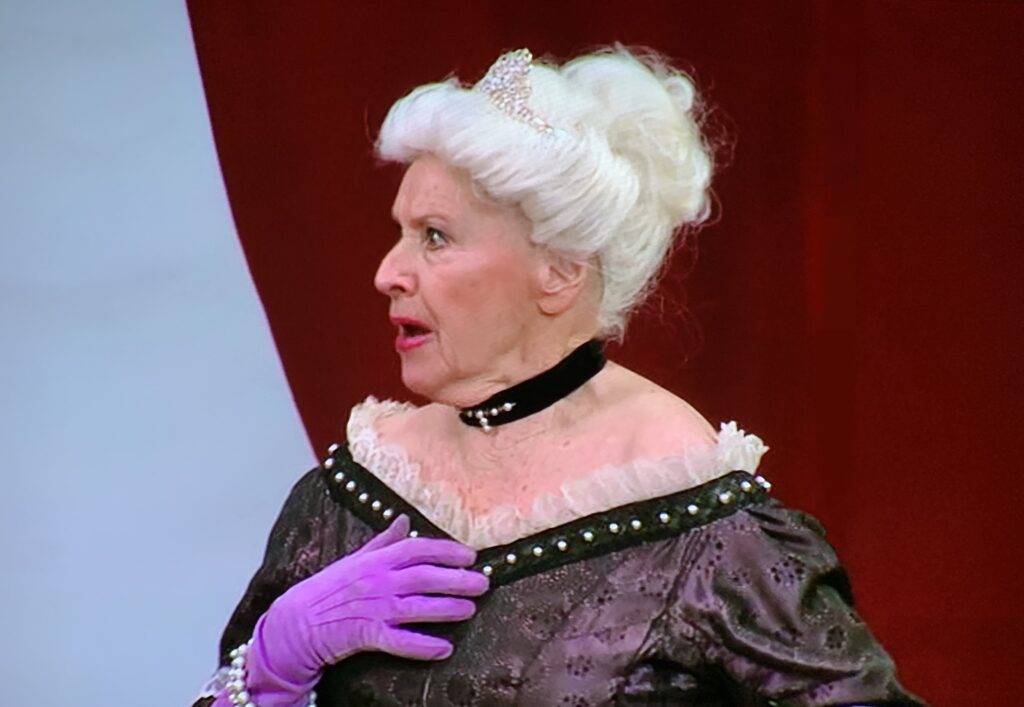
Taking this circumstance into account, the Johann Strauss Society of Vienna succeeded in enlisting three distinguished actors for its new production of Oscar Straus’s once immensely successful operetta The Last Waltz, foremost among them Waltraut Haas. She had won the hearts of audiences at the age of just twenty with her portrayal of Mariandl in the film Hofrat Geiger. A few years later, she became a film star whose popularity extended well beyond Austria, thanks to her role as the innkeeper in the film adaptation of Ralph Benatzky’s operetta The White Horse Inn (Im Weißen Rössel), in which she starred alongside Peter Alexander. From then on, she proved a crowd-puller, delighting audiences in every subsequent appearance. Having long held the work of the Johann Strauss Society of Vienna in high regard, Waltraut Haas frequently supported the Society’s activities. So when its president, Peter Widholz, invited her in 2012 to appear in one of the Society’s staged productions for the first time, she accepted without hesitation. In the operetta, set in Tsarist Russia, Waltraut Haas thus took on the comic role of the general’s widow Anastasia Alexandrowna, who spends the entire story desperately attempting to marry off her five eligible daughters to wealthy men.
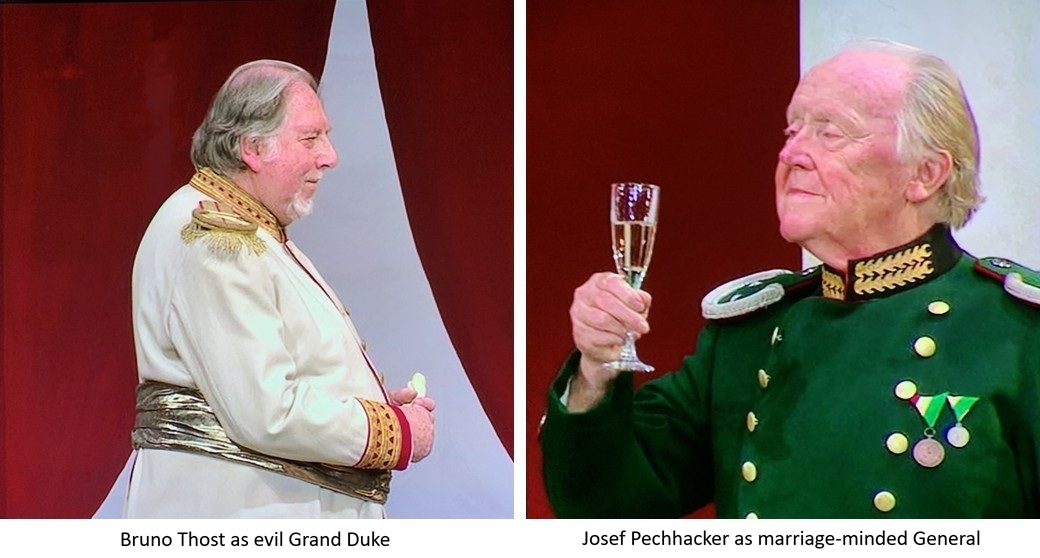
Alongside this celebrated star, Peter Widholz also managed to recruit two other performers well known to audiences from their stage and television appearances for the run of The Last Waltz. Bruno Thost, who had been a member of the Vienna Burgtheater ensemble for more than three decades, took on the role of Grand Duke Pawlow. In the play, Pawlow sexually harasses one of Alexandrowna’s daughters and then sentences to death the officer who comes to her rescue. The production, which was staged by the Classical Operetta Ensemble Vienna, marked Thost’s s debut with the company. He thus successfully continued the tradition of Burgtheater actors performing in productions presented by the Johann Strauss Society of Vienna since 1937. The third member of the star-studded cast engaged for this rarely performed work by Oscar Straus was Josef Pechhacker, who, unlike Thost, was no newcomer to the Strauss Society’s staged operetta productions. Best known for his performances at Vienna’s Volkstheater and Raimund Theater, the actor became especially popular with younger audiences through his role as Dr. Gruselglatz in Tom Turbo, the ORF-produced children’s television series in which he appeared for more than fifteen years. In the Oscar Straus operetta, he played the elderly General Gorzakow, whom Alexandrowna intends to marry off to her eldest daughter, Vera Lisaweta.
The role of Vera Lisaweta, portrayed by Fritzi Massary at the Berlin premiere in 1920, went to Cornelia Hübsch, while her tenor counterpart, the heroic Count Sarrasow, condemned to death, was played by Peter Widholz, who was also responsible for adapting and directing the production.
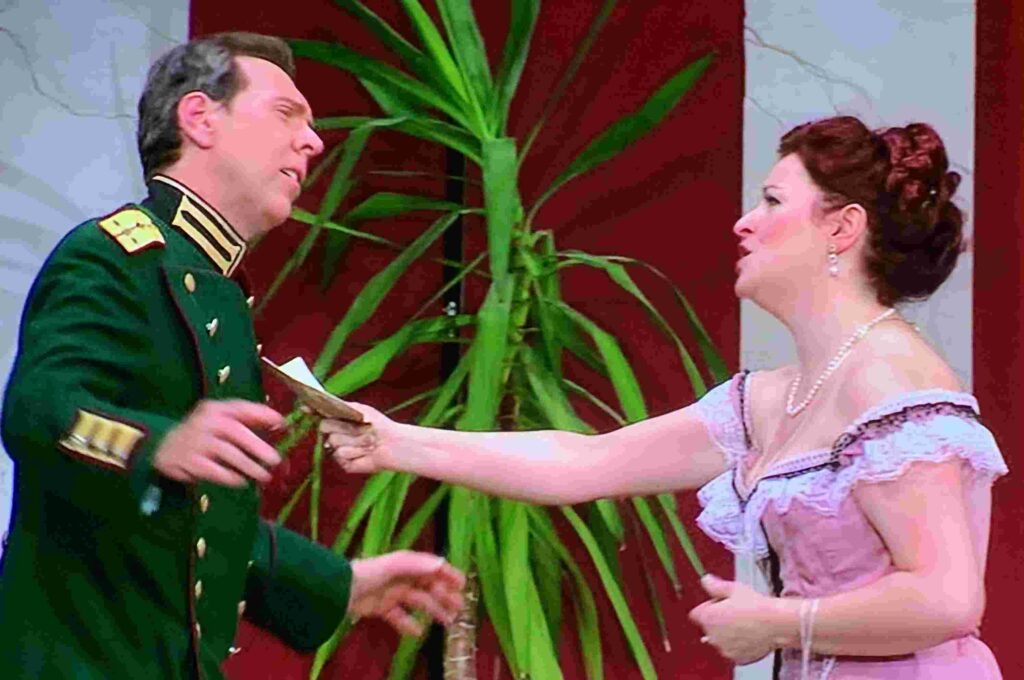
The comic couple featured Barbara Spitzer as Babuschka, Alexandrowna’s youngest daughter, and Stefan Reichmann as Baron Ippolith. In the final performance, Martin Rysanek took over the role of Baron Ippolith.
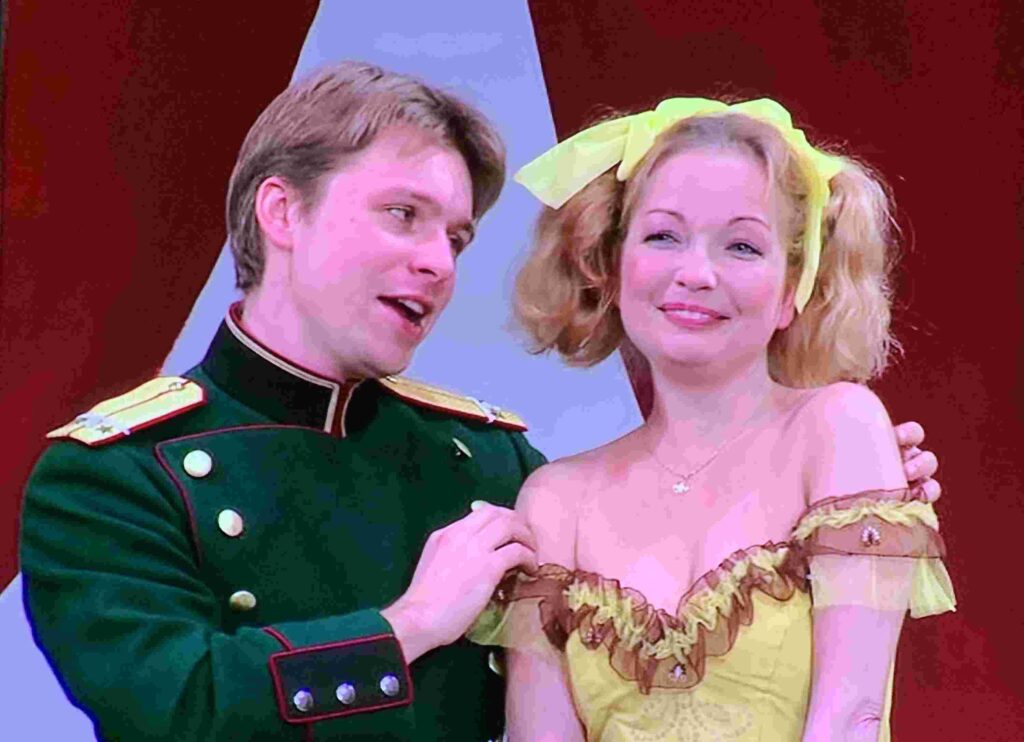
The Johann Strauss Society’s production of “The Last Waltz” celebrated its successful premiere in Vienna on 24th April 2013, before embarking on a tour of Austria’s federal provinces, following in the footsteps of several of the Society’s previous productions. The run culminated in a performance at the Stadttheater Wiener Neustadt on 22nd November 2013. Following the highly successful appearances of the Orchestra of the Guards Band Vienna in Oscar Straus’s operetta “The Chocolate Soldier” in November 2012 (see the article in this section on 2012) and in the Johann Strauss operetta rarity “Waldmeister” in March 2013 (see the article on 2011), the orchestra was once again engaged, this time for the production of “The Last Waltz”. As on the previous occasions, Colonel Bernhard Heher, Director of Music for the Austrian Armed Forces and conductor of the Guards Band, was at the podium, ensuring an authentic interpretation of Oscar Straus’s score, notable for its striking contrasts in melody and rhythm. The cast was complemented by students from BORG Wien 1, Hegelgasse 12, who appeared as Ballet dancers and in smaller supporting roles. Thus, alongside renowned actors, the Johann Strauss Society of Vienna integrated a lot of young people in the production both on stage and in the orchestra pit. The stage set was designed by the young artist Winston Wagner and Ingrid Nowotny was responsible for the superb costume design.

The tremendous success of this production is beautifully captured in a letter that the composer’s granddaughter, Inge Prebil-Straus, sent to Peter Widholz just a few days after the final performance:
2nd December 2013
Dear Professor Widholz,
The curtain came down, the lights came up, and the doors to the dressing rooms were opened – a draught swept through the theatre. But the audience stayed in their seats, applauding and cheering. The actors came back out for their bows, about ten times. And all this for a new production of my grandfather Oscar Straus’s operetta “The Last Waltz”, which I attended with my family and friends on 22nd November at the Stadttheater Wiener Neustadt.
I would like to express my heartfelt thanks to you, dear Professor, Widholz, for all the hard work you put into this production and for choosing such outstanding actors and singers from the Classical Operetta Ensemble Vienna. I cannot name all of them, but the much-admired Waltraut Haas nearly brought the house down. My thanks also go to the Orchestra of the Vienna Guards Band, conducted by Colonel Bernhard Heher, and the wonderful student ballet from Borg 1. I would also like to thank you for bringing so many operettas back to life, including my dear Bumerli in “The Chocolate Soldier”.
May “The Last Waltz” not, after all, turn out to be the last!
With warmest regards,
Inge Prebil-Straus, the composer’s granddaughter